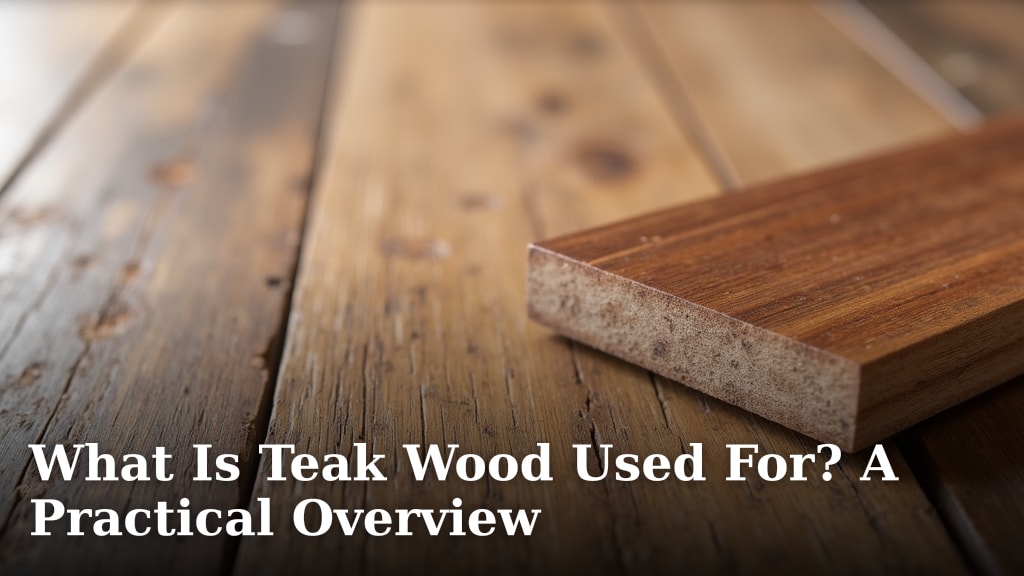
What Is Teak Wood Used For? A Practical Overview
Teak wood is a premium hardwood primarily used for outdoor furniture, boat building, and high-end interior flooring because of its natural oils that resist rot, insects, and harsh weather.
You’ve likely seen this **golden-brown wood** on a patio set or a park bench, but its uses go much further. It’s a top choice for **durable, low-maintenance projects** where you need something that can stand up to sun, rain, and time without constant upkeep.
- Outdoor furniture like tables, chairs, and benches that last for decades.
- Boat decks, docks, and marine applications due to its water resistance.
- Interior flooring, paneling, and trim for a warm, rich look.
- Carvings, sculptures, and decorative items for its workable grain.
- Heavy-duty construction and exposed structural elements.
Let’s walk through the most practical ways you can use teak wood around your home and in your projects.
Practical Uses of Teak Wood for Everyday Projects
Teak wood works best for projects that face the outdoors, moisture, or heavy daily use. Its natural oils make it resistant to rot, insects, and weather damage. You can find it in patio furniture, boat decks, flooring, and even decorative carvings. Most experts say teak is one of the **longest-lasting hardwoods** you can buy for outdoor use (USDA Forest Service).
Think of teak as the **workhorse of premium woods**. It handles sun, rain, and salt air without falling apart. That makes it a smart pick when you want something that looks good and lasts a long time with very little care.
Furniture and Outdoor Living
Outdoor furniture is probably the most common use for teak. You have probably seen a **teak patio table** or bench that looks just as good after years of sitting outside. That is because teak’s natural oils act like a built-in shield against moisture and sun damage.
Conclusion
Teak wood stands out as a top choice for projects that demand **durability and low maintenance**. Its natural resistance to rot, insects, and weather makes it ideal for outdoor furniture, marine applications, and long-lasting interior elements. While it is a premium investment, its longevity often means fewer replacements over time.
The best way to start is by choosing a small, high-impact project. Consider a teak garden bench or a bathroom shelf. You will quickly see why this wood has earned its reputation for standing up to the elements while looking great. When you are ready, look for **sustainably sourced teak** from reputable suppliers for your next build.
Frequently Asked Questions
Is teak wood worth the higher cost compared to other outdoor woods?
For projects exposed to constant sun, rain, or humidity, teak is often a smart long-term investment. We researched and found that woods like pine or cedar require more frequent sealing and may not last as long in harsh conditions. Teak’s natural oils reduce lifetime maintenance, which can offset the initial price.
How do I care for outdoor teak furniture?
The best part about teak is that it requires very little care. You can let it weather naturally to a silvery-gray patina, which does not harm the wood. If you prefer the original golden-brown color, apply a **teak-specific sealer** annually. Always clean it with mild soap and water first.
Can teak be used for indoor projects like kitchen cabinets?
Yes, teak is excellent for indoor applications like flooring, countertops, or cabinetry. Its natural oils and tight grain make it resistant to moisture and wear, which is great for kitchens or bathrooms. It provides a warm, rich aesthetic that is both durable and low-maintenance indoors.
What is the difference between plantation teak and old-growth teak?
Plantation teak is farmed in a sustainable, managed cycle and is the most common type available today. Old-growth teak comes from natural forests and is rarer, often with a more varied grain. For most home projects, **high-quality plantation teak** offers the same durability and benefits.
Does teak wood attract termites or other insects?
No, one of teak’s key natural properties is its resistance to insects, including termites. The same oils that repel water also deter insects and fungi. This makes it a reliable choice for outdoor structures and anywhere pests could be a concern.